

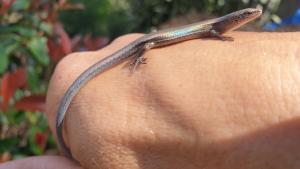
Plague skinks (Lampropholis delicata), also known as rainbow skinks, have made an incursion into Nelson and could spread into Tasman.
Plague skinks look like our native skinks but are a bit smaller. They’re brown or grey-brown with a dark brown stripe down each side, and an iridescent rainbow/metallic sheen when seen in bright light.
Our native northern grass skink (Oligosoma polychroma) superficially looks very similar to a plague skink but doesn’t have the rainbow sheen.
Those with a keen eye may be able to spot that native skinks have two smaller scales on top of their heads, whereas the plague skink has a single large scale.
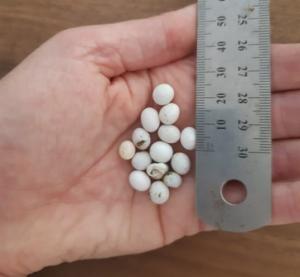 Our native skinks give birth to live young once a year, whereas the plague skink lays clutches of eggs several times a year.
Plague skinks are invasive pests originally from Australia that pose a threat to our declining native lizard population by competing directly for food and habitat. They have already invaded other countries, for example Hawaii, where their impact has resulted in the serious decline of native skink species there.
Many of our approximately 35 native skink species are in decline, or, in some cases, have become locally extinct through introduced predators such as rats, cats, mustelids and hedgehogs.
If you find a skink matching the description or have discovered a cluster of small white reptile eggs, please take some photos for identification and get in touch with our Biosecurity team at 03 543 8400 or [email protected].