

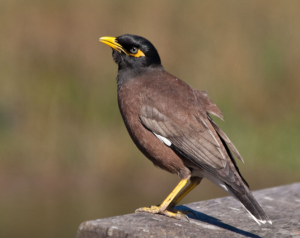
The Indian Myna bird is classified as one of 12 Exclusion pests under the Tasman-Nelson Regional Pest Management Plan, and while not yet established in our region, they pose a real risk should they arrive.
The Indian Myna bird is native to southern Asia and was first introduced throughout New Zealand in the 1800s, to help control invertebrate pests. It’s a member of the starling family, and is an omnivore feeding on fruit, grains, and native invertebrates.
The first release took place in Nelson in 1868, however the colder South Island climate meant populations failed to establish, aside from a small group in Richmond that persisted until the 1960s.
By contrast, in the warmer mid to upper North Island, Mynas not only survived, but thrived.
In recent years, their North Island range has extended further south towards Wellington, and in 2024, two Myna birds mysteriously appeared in New Brighton, Christchurch. Changing climate conditions in New Zealand are likely to create more favourable environments for them, increasing the likelihood of their spread into new districts such as Tasman.
Mynas are notorious for their aggressive behaviour towards other birds, making them a serious threat to native species. These birds are distinctive, with brown plumage, a black head, and a bright yellow beak, legs, and eye-bar.
If you spot a Myna bird in Tasman or Nelson, please report it immediately to our Biosecurity team on 03 543 8400.