

We’re always excited to hear of new ideas and efforts to improve the environment – especially those which aim to benefit the health of our catchment areas.
Over the next 12 months, Kotahitanga mō te Taiao Alliance (KMTT) and The Nature Conservancy Aotearoa New Zealand (TNC) are aiming to develop a restoration model that could be used across New Zealand, focusing on collaboration across whole river catchments for maximum benefit.
A new collaborative study will investigate the most affordable and effective ways of restoring native habitats across the fragmented lowlands of the Motueka, Moutere and Riuwaka river catchments in Tasman District.
In collaboration with nine iwi, five councils and several Government departments, and with the support of TNC, KMTT advances projects that protect and restore forests, wetlands, waterways and the surrounding oceans, working across 3.4 million hectares in the top of the south and Buller/Kawatiri.
As key partners, we look forward to what outcomes come from the study – particularly around different ways of funding the restoration work – and the potential ways we can incorporate them into the lowland areas around Tasman.
Our catchments are vital to the community, and we are keen to pursue the long-term benefits of restoration work.
Reestablishing native cover over large areas could accelerate New Zealand’s climate response, preserve globally significant biodiversity and support healthy, thriving communities.
At this stage, our involvement with the study extends to providing resources and staff time. This includes recently produced modelling on potential nature-based solutions in the Motueka catchment, as well as insights from work carried out at existing sites.
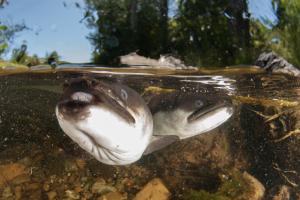
Pictured above: Freshwater eels/tuna are threatened by sedimentation in freshwater habitat in the lowlands of Te Tauihu. Image by Colin Marshall.