It seems almost un-New Zealand of us to seek your help in keeping kiwifruit numbers down in the wild. However, our nation’s biosecurity depends on your vigilance.
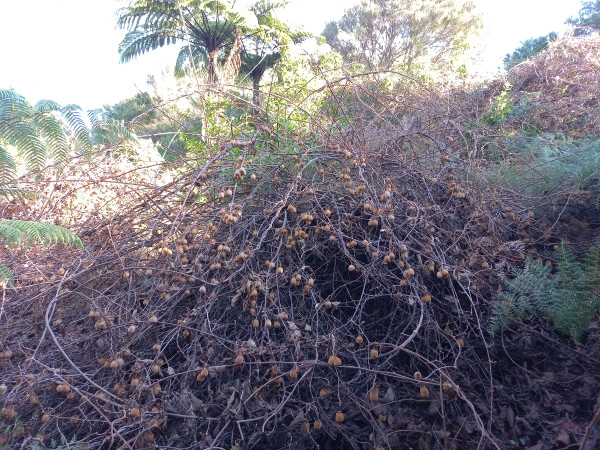
Kiwifruit is one of the country’s key commercial crops, exported and enjoyed across the globe. However, less palatable is the risk posed by wild vines that spread into forests by birds carrying seed, unmanaged or abandoned orchards, and self-propagated vines.
The vines are vigorous hairy climbers that can smother native trees and shrubs and degrade plantation forests.
Currently in the North Island, vines have become a reservoir for organisms that are a threat to kiwifruit production, such as pseudomonas syringae pv. actinidiae (PSA), a disease of kiwifruit, that has resulted in devastating losses for growers.
If PSA ever arrives in the South Island, we will need to know where all unmanaged or wild kiwifruit vines are located.
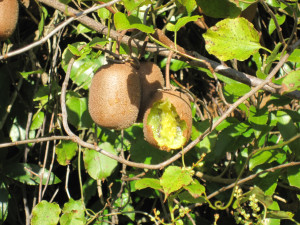
White flowers measuring 3-6cm across are produced in clusters between October and December. The resulting fruit is typically small, with the familiar brown, hairy exterior and bright green flesh producing numerous small black seeds.
During autumn, the large, rounded kiwifruit leaves will turn yellow, making them obvious in the canopy. They also have prominent vine sprouts, sticking out of tree canopies, and fruit may be evident.
Wild kiwifruit vines are listed as an Eradication Pest Plant in our Tasman–Nelson Regional Pest Management Plan.
If you have seen any wild kiwifruit vines, please let us know. Contact the Biosecurity team on 03 543 8400 or [email protected].