

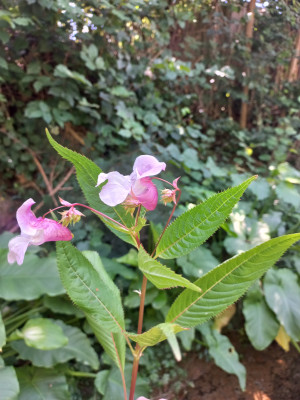
Here in Tasman, it is an Eradication species under the Tasman Nelson Regional Pest Management Plan.
Himalayan balsam is an attractive annual plant that can rapidly grow to 2.5m tall, appearing in Tasman over summer. The plant has pretty pink flowers that develop into seed pods in February/March.
Each seed pod can contain 4 – 16 seeds and has the unique characteristic of being spring-loaded. When the pods mature, they explode with enough force to propel seeds up to 7m away from the parent plant. This feature makes our job interesting, as collecting these seed heads before they explode can be like handling a miniature explosive device!
Himalayan balsam prefers to inhabit riparian margins and wetland areas, though it can grow just about anywhere. This plant competes with native plants for light, space, and pollinators (bees). It seeds heavily, allowing it to spread down waterways where it can dominate entire stream margins and terraces within a few years.
Along with flood events, the dumping of garden rubbish contributes to the spread of weeds like Himalayan balsam. Please dispose of your garden rubbish responsibly.
If this pest plant is in your garden, or you’ve seen it around, please contact our Biosecurity Team at biosecurity@tasman.govt.nz or on 03 543 8400.